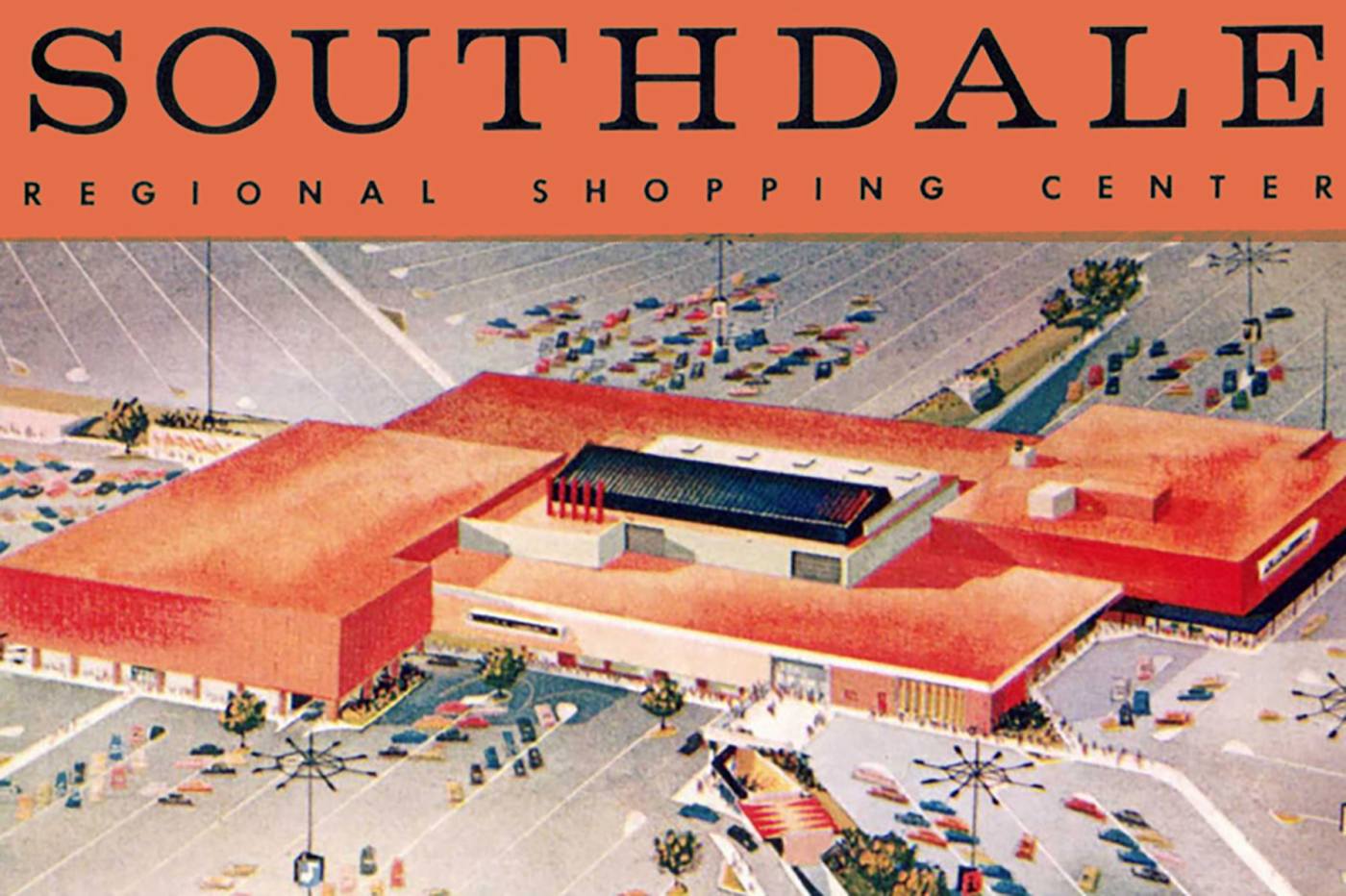
In his native Vienna, Viktor Grünbaum (1903-1980) studied architecture at the Academy of Fine Arts. He first worked alongside Peter Behrens, an architect and graphic designer considered a pioneer of industrial design. In 1936, Grünbaum was entrusted with the renovation of the store of the textile retailer Singer. He broke the existing molds.
Gone were the street-front windows for him; he moved the front door several meters back, creating a free space framed by large, theatrically lit windows. Customers could thus, at their leisure, without being disturbed by the continuous flow of passers-by, admire the magnified products in privacy and seduced, enter and buy them.
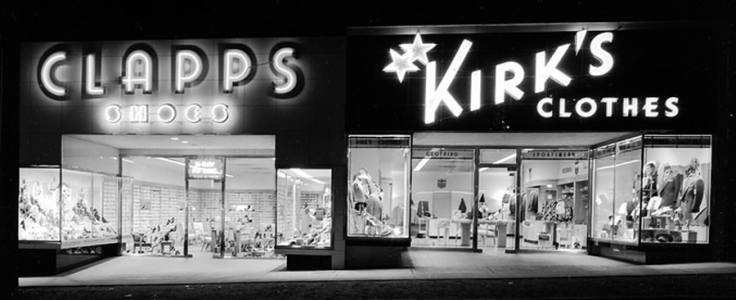
From a small static store, Grünbaum created large dynamic exhibition areas, and fundamentally changed the commercial approach by moving the customer from the outside (the street) to the inside (the alcove of the store), from public space to private space, from hubbub to calm, from the ephemeral to the permanent. The success of this novelty brought Grünbaum new customers, notoriety and respect from the profession and the specialized press. But History does not take individuals into account. When the German people preferred the filthy dictatorship to democracy, and when the Austrians married Nazi Germany by creating together the Gross Deutchsland, the beginning of a terrible period that would see Europe, then the world, put to fire and blood, massacres, destruction, nameless horrors, many were those who decided to flee, even if it meant losing everything, except life and honor. Among them, understandably, was Viktor David Grünbaum, a Jew and socialist.

He was 35 years old in 1938 when he emigrated to the USA. As soon as he arrived in New York, he changed his name to Victor Gruen. Without even speaking English, he quickly found work, first as a designer and then as an architect. In 1941 he moved to Los Angeles where in 1946 he founded the firm Victor Gruen Associates (which still exists today). Two years later he began discussions with the owners of the Hudson’s department store in Detroit (Michigan). The suburbs of large cities were made up of large residential areas, nothing but residential areas. A sort of dormitory area where commerce had no place. Gruen proposed to Hudson’s the creation of a gigantic outdoor pedestrian shopping center that would be designed like a city. Composed of a friendly and attractive mix of varied shops, cafes, restaurants, rest areas, green spaces, places of leisure and culture, auditorium and theater, bank, post office, infirmary, nursery, central square, street, fountains, sculptures, etc … and even a fallout shelter !!! a sort of modern reconstruction of his native Vienna, magically appearing in the middle of nowhere.
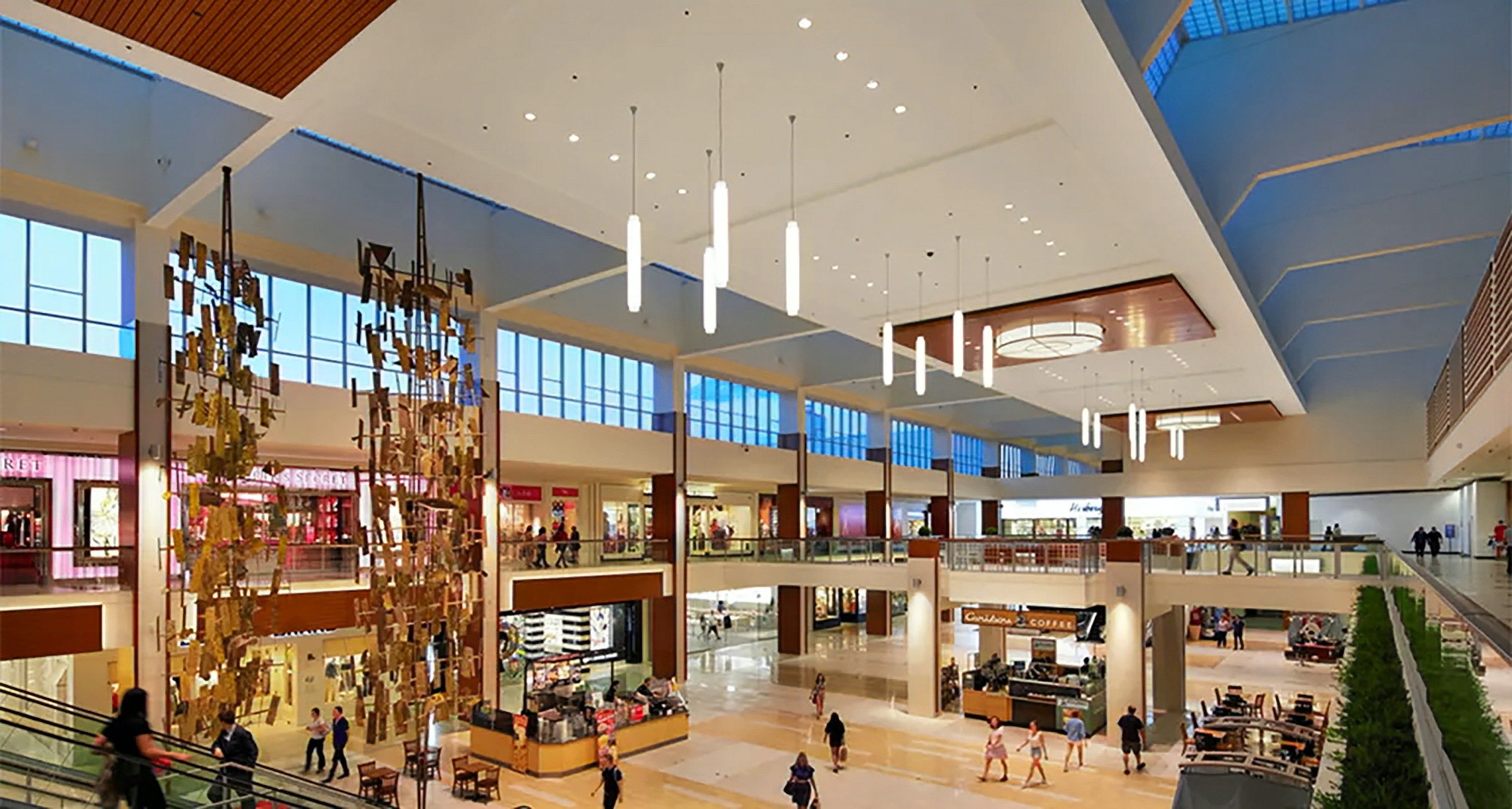
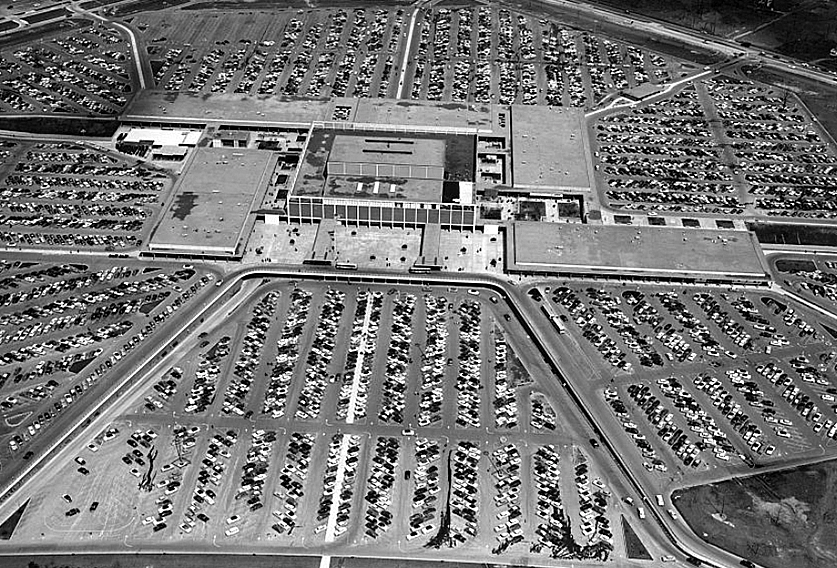
This is how the Northland Center was born in 1954, in Southfield in the suburbs of Detroit, surrounded by more than 5000 parking spaces, in the land of the car-queen … the very first shopping center in the world. Today, after many transformations and as many owners greedy for profits, the Northland Center is abandoned, a wreck surrounded by empty parking lots. Ite missa es.
Gruen, who called himself the “People’s Architect,” wanted to combine commercial and social activities in the stereotypical, drab suburban sprawl by creating “shopping towns,” a concept he had articulated in 1943 as part of a national competition to design a city in the year 194X. X for the then-unknown year when World War II would end!
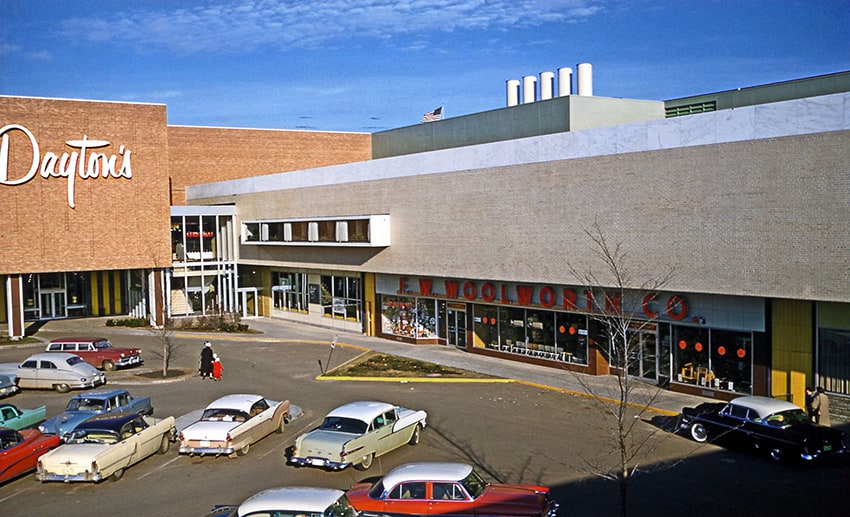
© Gruen & Associates
The Northland Center, at the time the largest shopping mall in the world, attracted masses of satisfied consumers and generated remarkable profits, … BUT, because there are always “buts”. The first came from shareholders and developers who perverted Gruen’s utopian dream. They focused everything on sales, neglecting culture, entertainment, green spaces, in short everything that did not bring in money. The second appeared in the 60s when the white middle class fled the mixed neighborhoods of the city center to prefer the very white suburbs and thereby accelerate the impoverishment of cities deserted by the wealthy populations.
Enough to make Gruen very upset. His idea of a shopping city had turned into a deserted city. So he turned to the revitalization of the suffering city centers neighborhoods … by creating integrated shopping centers, such as are today in increasing numbers in the large Asian metropolises. Towards the end of the 1960s, when many American cities were in turmoil, Gruen returned to his native Vienna. The Vienna Chamber of Architects refused him the title of architect because he had not, and for good reason, completed his studies in nazified Vienna!

The center of Vienna, pedestrianized since 1974. © C.Stadler/Bwag
A good prince, Gruen donated to this “honorable” chamber a considerable sum at the time of 10,000 Austrian shillings, then founded in 1973 the Zentrum für Umweltfragen (Center for Environmental Issues). He then published the “Vienna Charter” which, in opposition to Le Corbusier’s “Athens Charter”, sets out the principles of a city on a human scale, of greater compactness to promote exchanges. In the early 1970s, the visionary Gruen proposed to transform the entire city center of Vienna into a mixed-use, pedestrian and car-free zone, which was achieved in November 1974… where Brussels only comes close today!
Gruen stressed for the rest of his life that real estate companies and developers had hijacked his concept of a “shopping city” by reducing it to a mere “sales machine”.
Brigitte & Jean Jacques Evrard
 ADMIRABLE ARCHITECTURE - BLOG
Leave a comment